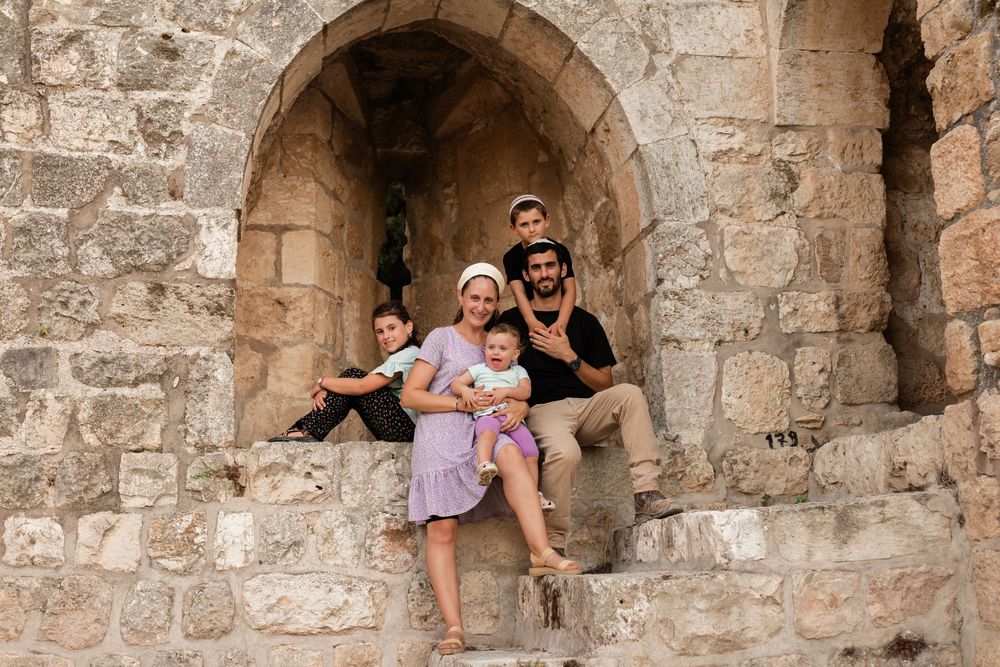
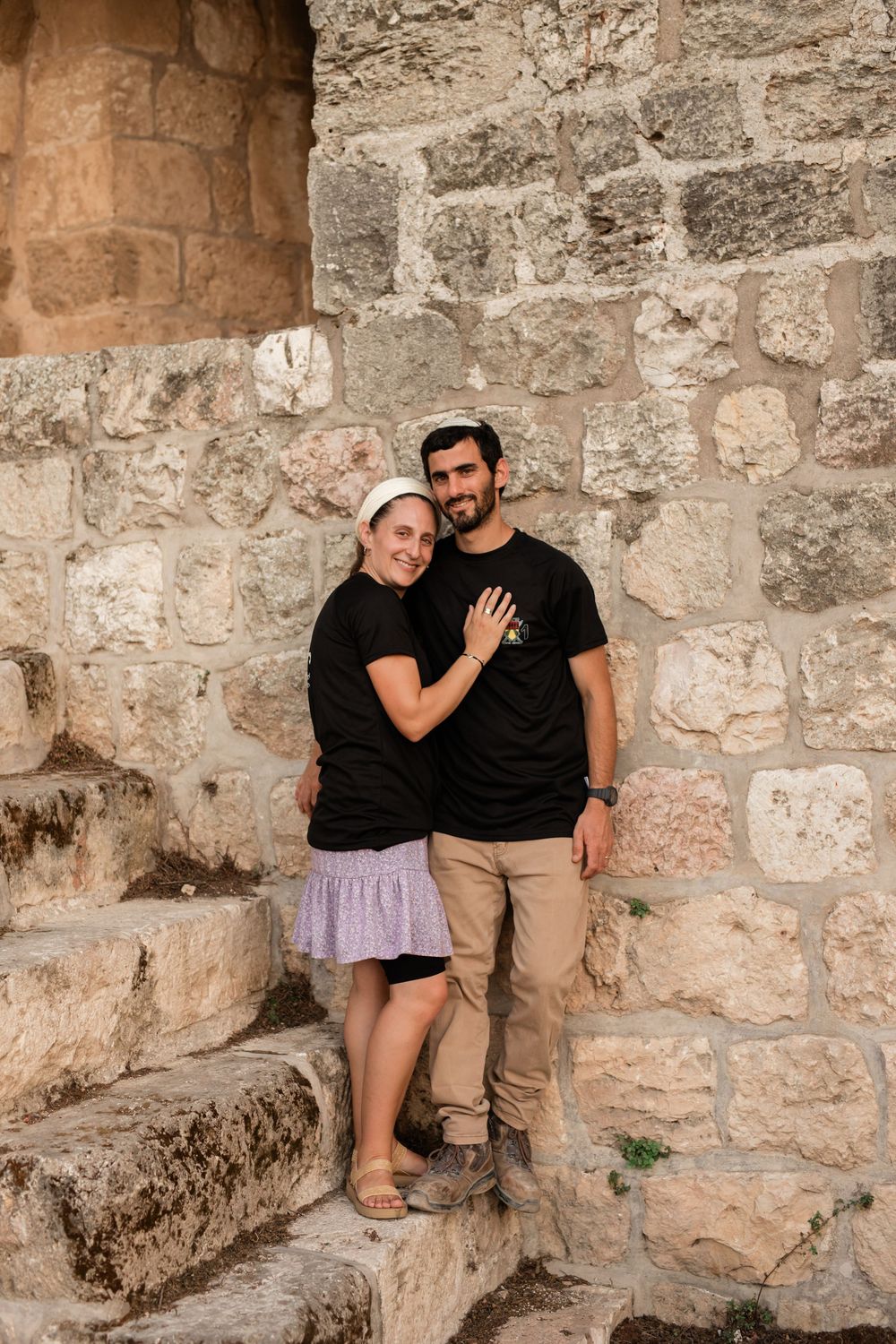
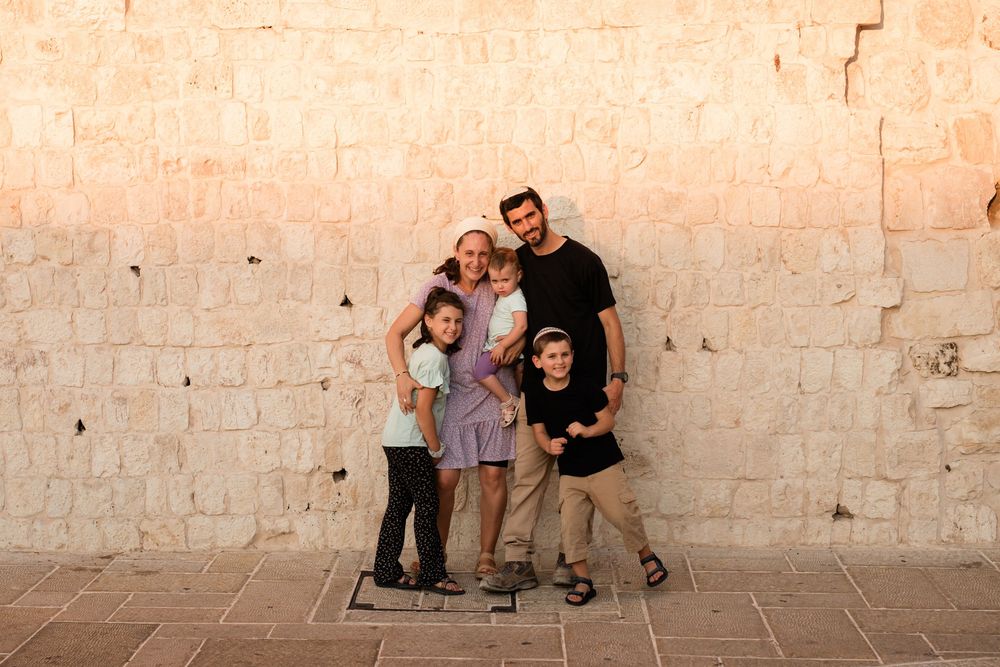
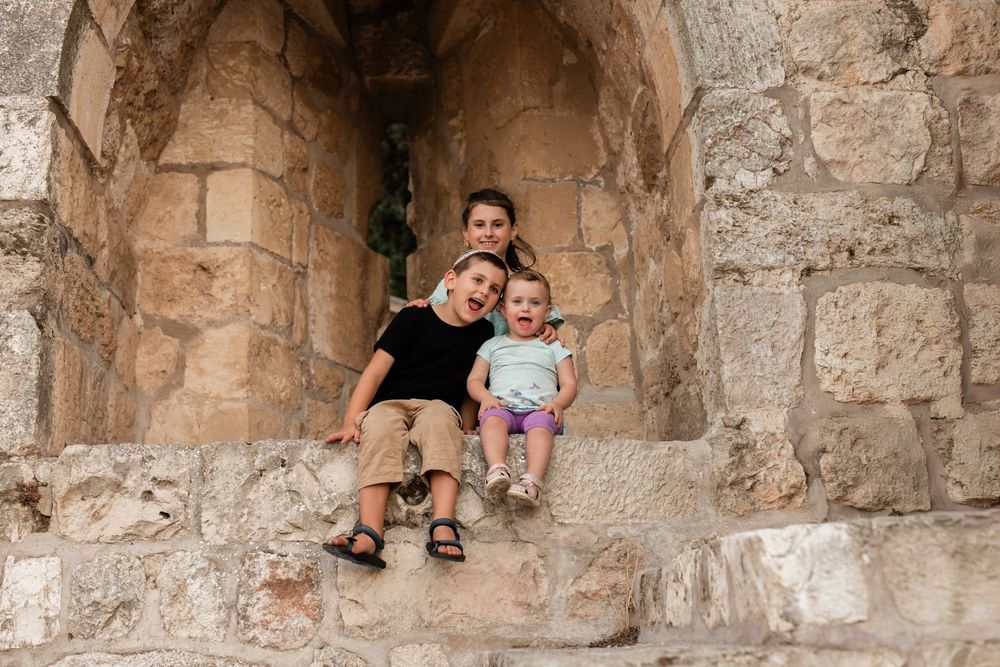
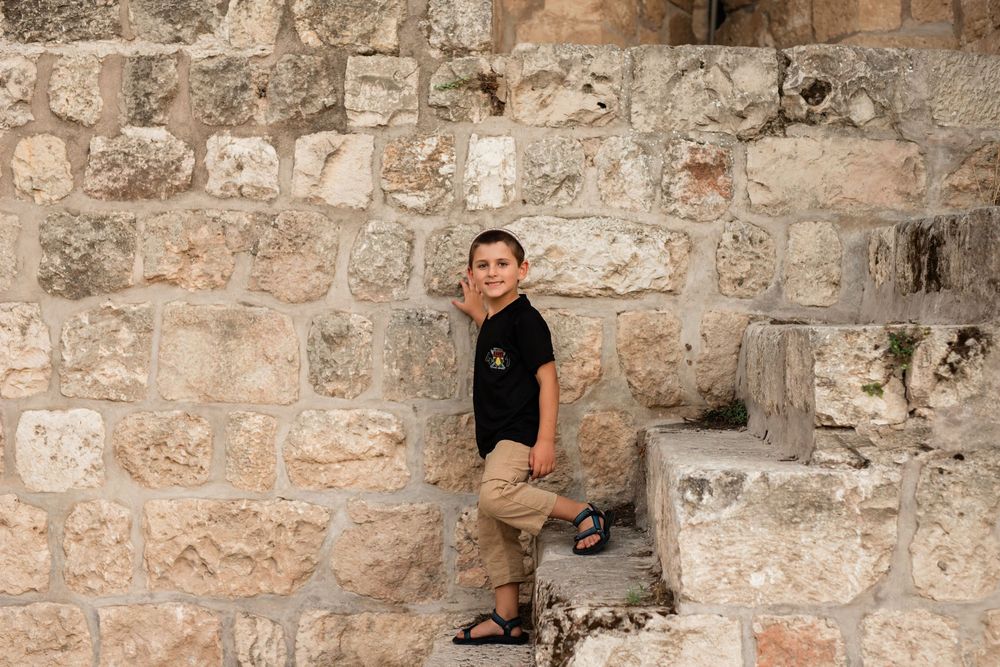
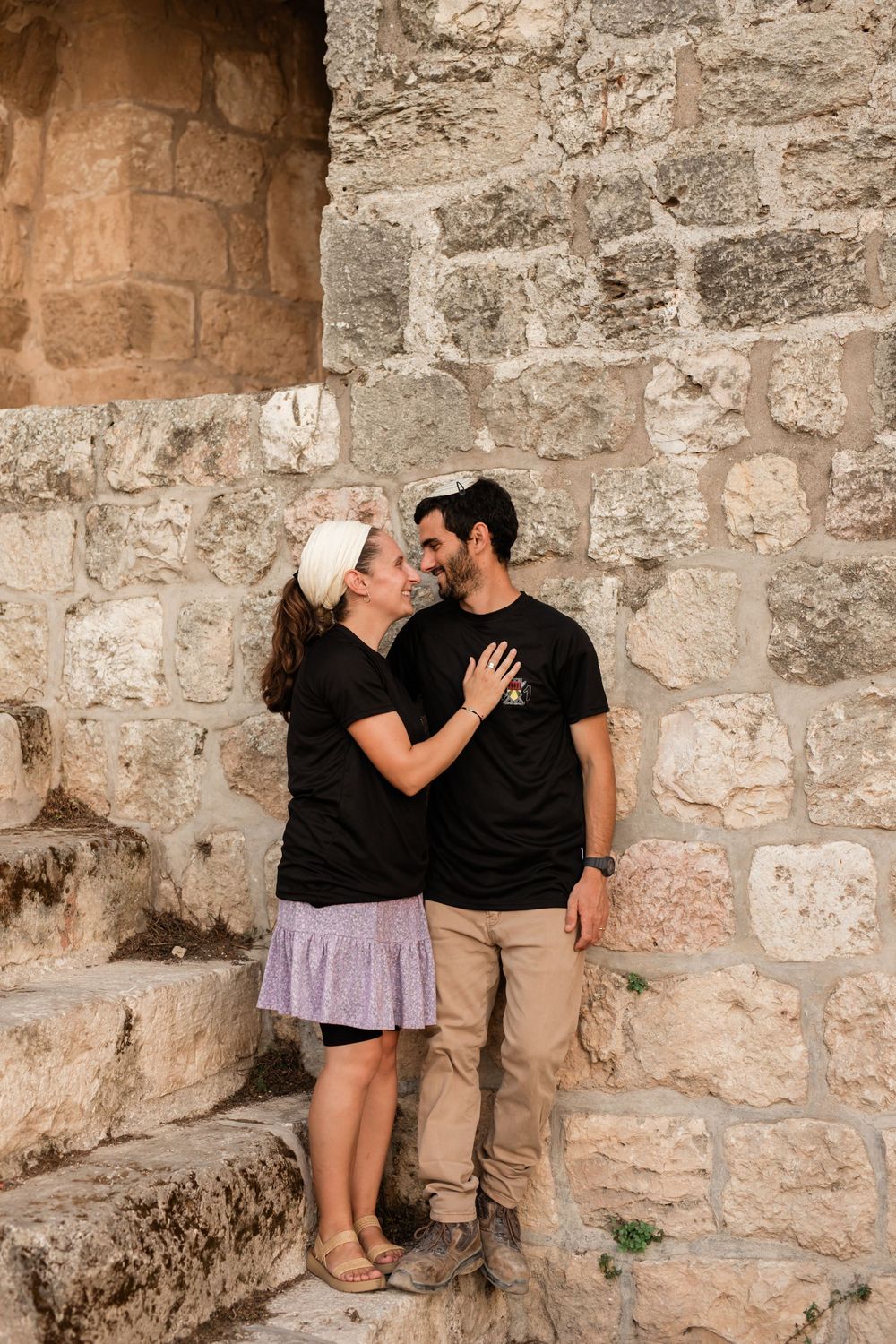
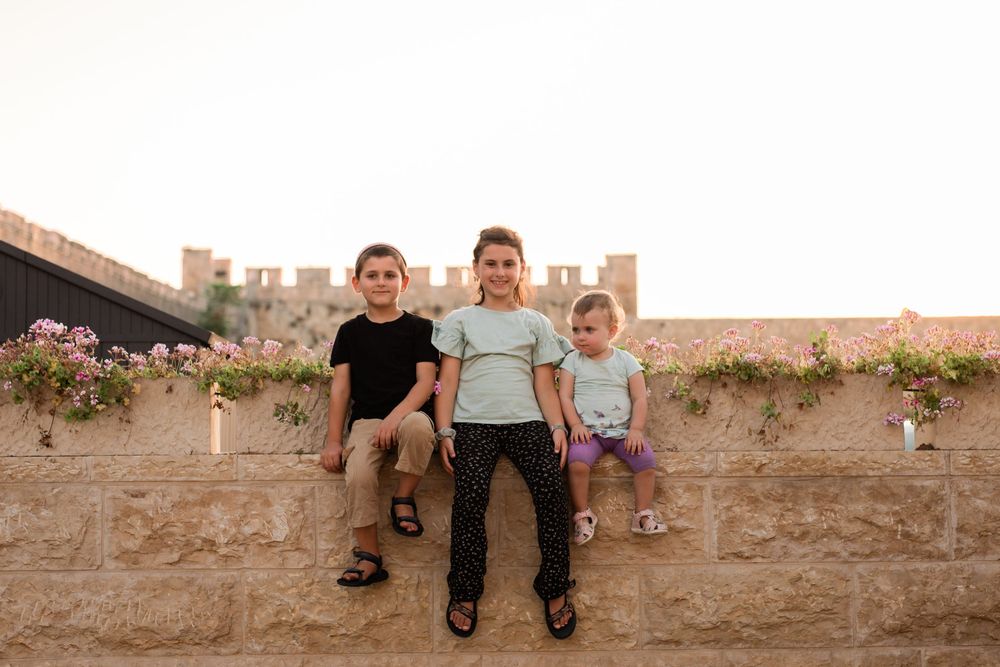
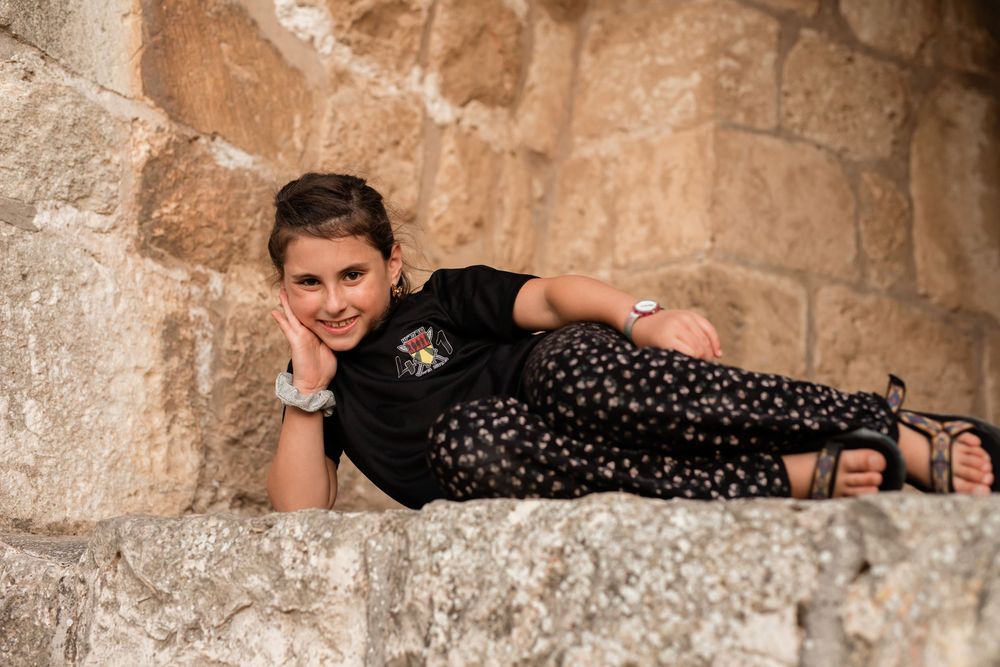
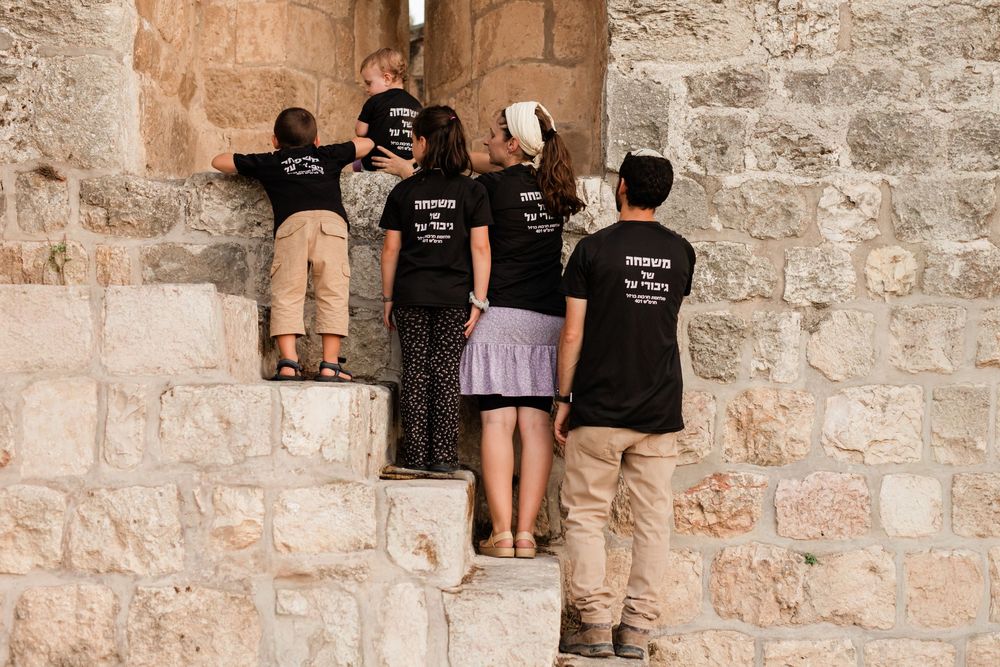
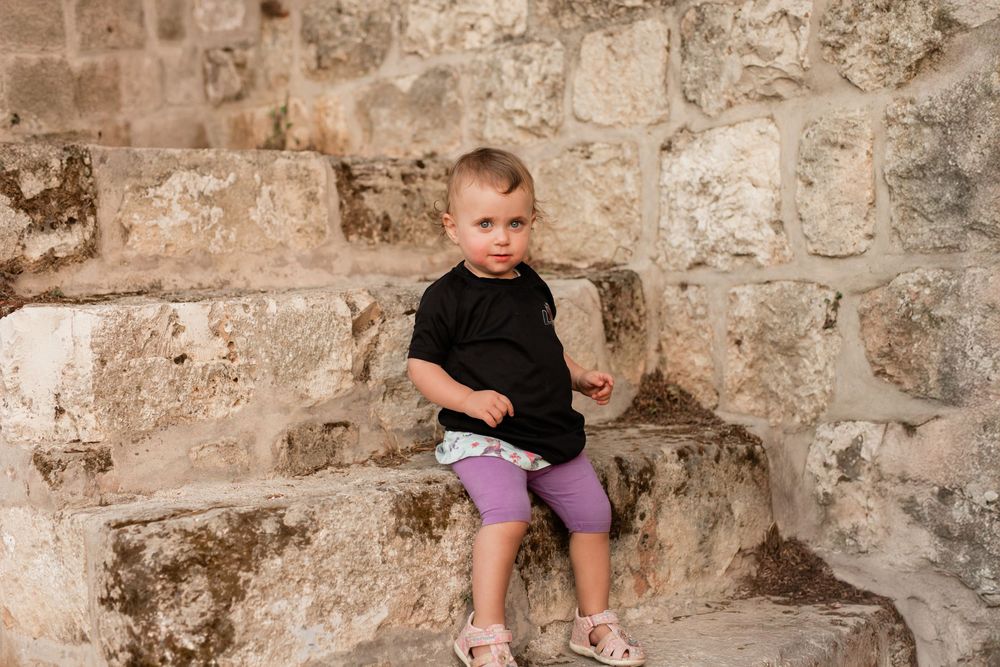
Meet Nechama, Zecharya, Hila, Kfir and Nitzan Danziger.
Simchat Torah began as any Shabbat would. It was calm. Nechama, her three children, and their dog Milu were on their way to meet Zecharya in Synagogue when their peaceful walk was suddenly interrupted by a wailing alarm. With no building nearby to seek shelter, Nechama quickly unbuckled the baby from the stroller and instructed her panicked children to crouch on the ground and cover their heads. Seeing that Kfir was still standing to protect the dog, Nechama took the leash from his hand and told him to take care of himself while she looked out for Milu. When those terrifying minutes were over, they met Zecharya and finished praying at Synagogue. Zecharya returned home to retrieve his phone and seek instruction from his commander while Nechama took the children to their family friend who had been set to join them for lunch. They all made their way to the Danziger house together, continuing with their plans as usual, albeit having to take cover several times along the way. They enjoyed a beautiful meal together and when alarms sounded again, they sat in the safe room while the children played. Meanwhile, Zecharya communicated with his commander and began packing his bags. Nechama put food together for him and explained to the children that Abba (dad) was leaving to defend the country but that they would pray for him and hear more after Chag.
״ואיכשהו, עם הפחד והעצב והלא ידוע נהייתי חזקה- בשביל בעלי שהיה צריך לצאת לתפקד ולהגן על המדינה ובמיוחד בשביל הילדים שירגישו חום, אהבה, סוג של שגרה ותמיכה.״
״Somehow, with the fear and sadness and unknown, I became strong. For my husband- who had to go out and protect the country- and especially for the children so they would feel warmth, love, some kind of routine and support.״
Zecharya, and his family by extension, completed two rounds of reserves. The first was from October 7th until March. The second was from the start of Passover until Mid July.
In the first few months, Nechama and her children connected to the soldiers stationed in their neighborhood. They greeted them with their dog, made cookies for them, washed their clothes and wrote them thank you letters. Through these soldiers, Nechama felt connected to Zecharya.
“שאם לא היה לנו תקשורת עם אבא שלהם שמגוייס — אז יכולנו לתת לחיילים מילואים מתחושת הבית במקום — בתקווה שמישהו אחר היה נותן לזכריה את תחושת הבית במקומו”
— “If we didn’t have communication with Abba who is mobilized, at least we could give the soldiers in our area a sense of home in the hope that someone else would give Zecharya a sense of home wherever he was.”
Only when the soldiers finished their time in her neighborhood did Nechama truly begin to experience her loneliness. She remembers it as one of the first times she truly cried for everything that was going on.
Zecharya would occasionally come for “visits,” a term Nechama began using with her children to prepare them for his temporary returns and spare their disappointment. But it didn’t get easier each time the visits ended. Midrasha girls and other neighbors and community members came to help with dinners, showers, laundry, and play time. With the extra help around the house, Nechama could spend less time in the kitchen and more time providing attentive care to her children. The support from others helped her carry on.
אני חושבת שהקסם על איך להתמודד לבד, זה לא להיות לבד. להיות קשוב לצרכים שלך. לקבל הצעות של עזרה וגם לבקש עזרה איפה שצריך
“I think the magic of how to cope alone is by not being alone. Be attentive to your needs. Receive offers of help and also ask for help where needed.”
I wrote to Nechama Erev Sukkot and heard back the following:
“Getting ready for third round of reserves… so day by day and b’yachad.”
It’s hard to believe that we are still here and the pain is often paralyzing. But if there’s anyone from whom to take the reminder that we’ll get through it together, it is from a reservist wife like Nechama who has truly been in it since the beginning.